
News

Can environmental DNA combat deadly parasites threatening Canada’s oysters?

This article was written by Responsible Seafood Advocate and originally published by Global Seafood Alliance on May 21, 2025. We are sharing the full text here for reference. All rights remain with the original publisher.
Tool would detect and track deadly MSX and Dermo parasites
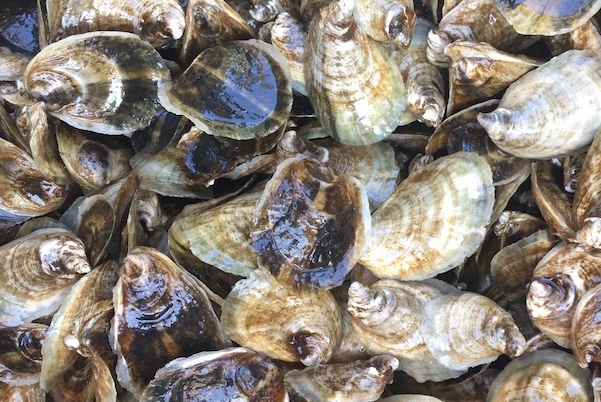
Genome Atlantic and Genome Canada have announced $800,000 (U.S. $573,000) in funding for a new environmental DNA (eDNA) research project to help Canada’s shellfish sector better defend against MSX and Dermo parasitic threats. Photo credit: John Hillis, Truefaux Films
Genome Atlantic and Genome Canada have announced $800,000 (U.S. $573,000) in funding for a new environmental DNA (eDNA) research project to help Canada’s shellfish sector better defend against two major parasitic threats: Multinucleate sphere Unknown X (MSX) and Perkinsus marinus (Dermo). By identifying these parasites early, the project seeks to prevent outbreaks, protect oyster stocks and support the sustainability of the shellfish industry.
The project will focus on developing a water-based genetic surveillance tool to help the industry, provincial governments and regulators detect and track these deadly parasites before they visibly impact oyster populations. It will also generate valuable data to be used in epidemiological models to better understand and predict transmission rate and distribution in areas where the parasites are found.
“During the COVID-19 pandemic, Canadians saw these surveillance tools in action, monitoring wastewater for levels of the SARS-CoV-2 virus in communities,” said Rob Annan, president and CEO of Genome Canada. “Genome Canada is investing in these new projects to build capacity for future pandemic preparedness, ongoing public health monitoring and stronger environmental protection for our country.”
Environmental DNA and RNA (collectively referred to as eDNA) are genetic materials that organisms shed into their surroundings, including water, soil and air. eDNA surveillance is a non-invasive method for assessing the health of ecosystems and communities, generating data that supports timely, evidence-based decisions in areas such as biodiversity monitoring, pathogen detection, antimicrobial resistance tracking and forensic analysis.
MSX, caused by the parasite Haplosporidium nelsoni, affects oysters by slowing their growth and increasing mortality rates, but it does not pose any risk to human health or food safety. Dermo is a serious oyster disease caused by the parasite Perkinsus marinus, leading to high mortality rates in both farmed and wild oysters.
This research project comes at a critical time, as Prince Edward Island’s (PEI) spring oyster season is underway and local fishers are reporting significant impacts from MSX. In July 2024, the deadly MSX parasite was detected in wild oysters from Bedeque Bay, Prince Edward Island, marking the first confirmed case in the area. The project’s findings could offer oyster growers and regulators valuable tools and insights to better detect and manage parasite risks in the future.
Parasites pose a serious threat to Canada’s fishing industries, with early, rapid and comprehensive detection critical to managing outbreaks. MSX devastated the Bras d’Or Lake oyster industry in Cape Breton over two decades ago and has caused significant mortality in parts of Prince Edward Island since its detection in July 2024, followed by confirmation in New Brunswick in November. Dermo, already responsible for large oyster losses along the eastern seaboard, has now also been identified in some areas of New Brunswick and Nova Scotia.
Read more about the project here.
Source: Global Seafood Alliance. Original article available here.
Recent News
This article was written by the Global News Staff and originally published by Global News on November 28, 2024 at…
This article was written by Stacey Janzer and originally published by CBC News on November 27, 2024 at 6:00AM AST.…
Statement November 27, 2024 – Ottawa, Ontario – Canadian Food Inspection Agency (CFIA) The Canadian Food Inspection Agency (CFIA) has…
This article was written by Same Farley and originally published by CBC News on November 22, 2024 at 6:00AM AST.…
Statement November 21, 2024 – Ottawa, Ontario – Canadian Food Inspection Agency The Canadian Food Inspection Agency (CFIA) has confirmed…
This article was written by Leigha Kaiser and originally published by CTV News on November 8, 2024 at 12:06PM EST.…
This article was written by Kevin Yarr and originally published by CBC News on October 8, 2024 at 1:54PM ADT.…
This article was written by Kevin Yarr and originally published by CBC News on October 4, 2024 at 2:50PM ADT.…
This article was written by Stephen Brun and originally published by CBC News on October 3, 2024 at 7:14PM ADT.…
This article was written by Kevin Yarr and Alex MacIsaac and originally published by CBC News on September 27, 2024…