
News

Damaging MSX parasite detected in P.E.I., threatening oyster growers

This article was written by Lisa Jackson and originally published by Global Seafood Alliance on August 13, 2024 at 7:13PM ADT. We are sharing the full text here for reference. All rights remain with the original publisher.
MSX parasite detected in oysters from Bedeque Bay, P.E.I. for first time, ‘devastating news’ for the local oyster industry
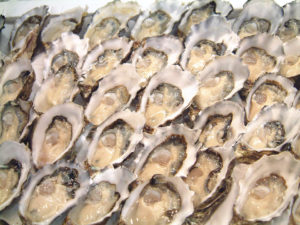
The deadly MSX parasite has been detected in oysters from Bedeque Bay, P.E.I., threatening the local oyster industry. Photo by Mark Stebnicki.
A deadly disease has been detected in wild oysters from Bedeque Bay, Prince Edward Island (P.E.I.), which could threaten the local oyster industry. Multinucleate sphere X (MSX), caused by the parasite Haplosporidium nelsoni, affects oysters by slowing their growth and increasing mortality rates, but it does not pose any risk to human health or food safety.
In June, oyster harvesters raised concerns with provincial authorities after noticing an unusual spike in oysters dying. The Canadian Food Inspection Agency (CFIA) analyzed samples and confirmed the presence of the MSX parasite.
“The presence of MSX in oysters in Bedeque Bay is devastating news for our province,” said Cory Deagle, minister of Fisheries, Tourism, Sport and Culture, in a written statement. “It isn’t just about the impact on our oyster industry, it is about the livelihood of Islanders, their families and our communities. The Island’s oyster industry is part of our culture and tradition.”
Oysters with MSX typically start dying at around two years old, which is when they reach market size. Affected oysters may be slow to close their shells, appear thin and watery when opened and have brown spots inside the shell.
It’s the first time MSX has been found in oysters on P.E.I. To limit the spread of MSX, CFIA, Fisheries and Oceans Canada (DFO) and the P.E.I. government are working with scientists and partners to monitor the situation, implement movement controls and investigate the source. They are also tracking and testing oysters to understand how common MSX is in the area.
“This is the first time we have had to deal with MSX in our province and while MSX has been heavily researched over the years, scientists, researchers and fishers around the globe still do not understand how the disease spreads,” said Deagle. “It will take time before we know the full extent of the impact on our industry.”
Twenty years ago, MSX caused mass mortalities in the oyster population of the Bras d’Or Lake in Cape Breton, Nova Scotia. DFO closed the estuary to oyster farming in 2002. With emerging research and technology, there is hope that it will reopen in the future.
According to the province, P.E.I. is the second-largest oyster-producing province in Canada and the top producer in Atlantic Canada.
“While inspection, regulation and control fall under the authority of CFIA and DFO, as the provincial body for aquaculture, the shellfish sectors, and their processors, the provincial government has always been, and will always be, here to support our industries in times of great difficulty,” said Deagle. “Many of our oyster fishers have given their entire adult lives to the industry – we will continue to be there to support them.”
Source: Global Seafood Alliance. Original article available here.
Recent News
This article was written by Stephen Brun and originally published by CBC News on July 20, 2024 at 11:24AM ADT.…
This article was written by Isabelle Gallant and originally published by CBC News on July 19, 2024 at 8:16PM ADT.…
This article was written by Shane Ross and Wayne Thibodeau and originally published by CBC News on July 16, 2024…
This article was written by Shane Ross and originally published by CBC News on July 15, 2024 at 7:55 PM…
This article was written by Shane Ross and originally published by CBC News on July 14, 2024 at 5:47PM ADT.…
This article was written by Shane Ross and originally published by CBC News on July 13, 2024 at 1:34 PM…
- « Previous
- 1
- …
- 5
- 6
- 7